Blog -9 : Why Does TYOU Insist On Using Copper Cables Inside Its Photovoltaic Modules & Solar MC4 Connectors When Aluminum Solar Cables Are Taking Over?
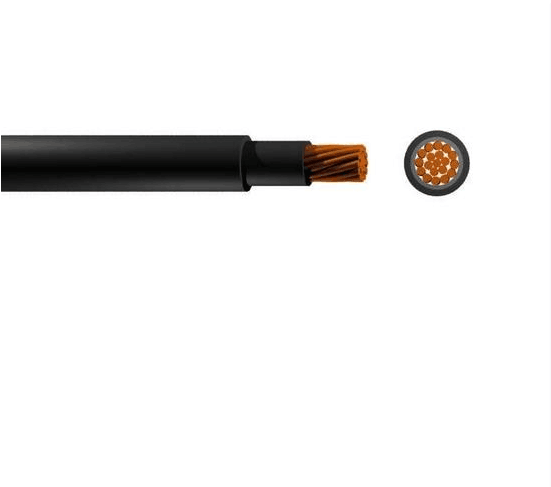
With copper prices soaring, why can't components such as cable connectors in solar panel modular systems be replaced with copper-aluminum alloys?
Due to various reasons, copper prices had soared to over CNY 100K/TON by April 23, 2026. The increasing pressure of copper prices on solar photovoltaic modules is mounting. Meanwhile, the strong demand for copper in recent years, driven by rising copper prices and the development of the new energy industry, has led major cable manufacturers and research institutions to intensify their research on "aluminum replacing copper" under cost pressures. Advances in aluminum alloy cable manufacturing processes have also resulted in superior quality. Our technical comparison of copper cables and aluminum alloy cables is as follows:
|
Feature Dimension |
Copper cable |
Aluminum alloy cable |
|
Electrical conductivity (IACS) |
100% (Standard benchmark) |
Approximately 61.2% |
|
Density (g/ cm3 ) |
8.9 |
2.7 |
|
Cross-sectional area required to carry current |
Standard benchmark |
Approximately 1.5 times that of copper. |
|
tensile strength |
220-270 MPa (optimal) |
200-250 MPa |
|
Creep resistance (100℃, 10 years) |
Excellent ( < 0.2%) |
Good (≤0.5%) |
|
Corrosion resistance |
Excellent (Best overall) |
Medium (better than pure aluminum) |
|
Connection point stability |
Most stable and reliable |
Good (requires specialized technology) |
|
Material costs (relative to copper) |
100% (benchmark) |
15%-25% |
In particular, advancements in connection technology have enabled dedicated copper-aluminum transition connectors to employ friction welding or precision transition structures, solving the problems of electrochemical corrosion and thermal expansion and contraction loosening caused by dissimilar heavy metals. Furthermore, these connectors have passed certifications from authoritative organizations such as TUV.
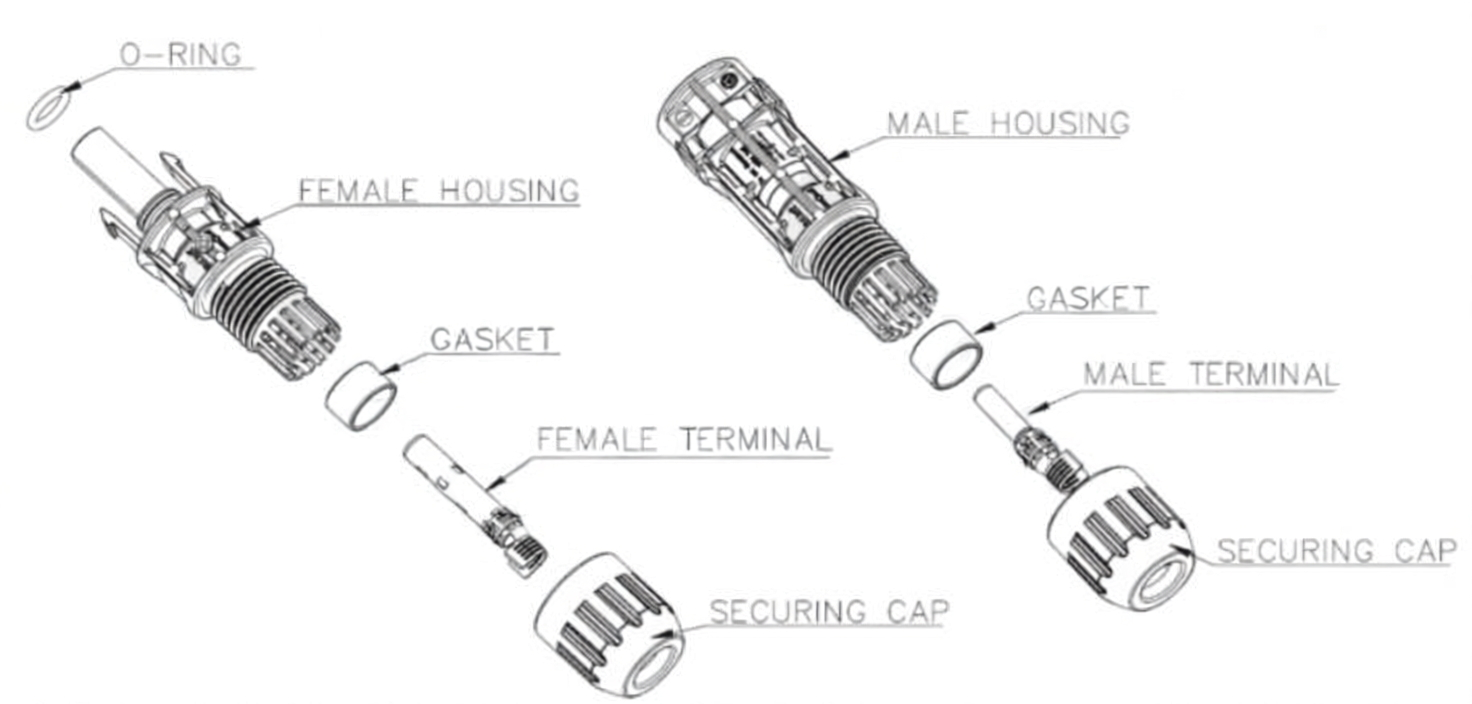
So why does TYOU insist on using copper cables inside its photovoltaic modules and in the directly connected solar MC4 connectors? There are several reasons:
• Exceptional flexibility and reliability: Copper is approximately 30% more flexible and 40% less elastic than aluminum alloys, making it less prone to breakage even after repeated bending. Considering the frequent bending of connecting cables during component installation and solar tracking, small-section copper cables are the best choice to ensure mechanical lifespan.
• Stable chemical and electrical properties: Aluminum is more reactive than copper, meaning it is more susceptible to oxidation and corrosion in humid, high-temperature outdoor environments. This leads to increased contact resistance, overheating at connection points, and, in extreme cases, a fire probability an order of magnitude higher than that of copper conductors. Furthermore, component interfaces (MC4 connectors) are generally copper-core; direct connection with aluminum wires would trigger electrochemical corrosion. Given the lack of widespread use of dedicated miniature copper-aluminum transition connectors, using copper wires is the safest and most reliable solution.
"Aluminum instead of copper" should not be used in PV modules, but that doesn't mean that aluminum alloy cables cannot be used in photovoltaic power generation systems. So where should "aluminum instead of copper" be used?
DC Side
• String to combiner box/inverter: This is the core application scenario for aluminum alloy cables on the DC side, used to collect the DC power from each string.
• Combiner box to centralized inverter: In large power plants, the DC power collected in the combiner box is transmitted to the inverter through aluminum alloy cables, which is another major application.
AC Side
This is currently the most mature application of aluminum alloy cables, and it can be used in almost all AC transmission lines.
• Inverter to Transformer: Low-voltage AC power is delivered to the step-up transformer.
• Transformer to power grid: The stepped-up medium and high voltage AC power is connected to the power grid.
In short: the use of copper wires inside photovoltaic modules ensures absolute safety and reliability; the use of aluminum alloys on the outside of the modules achieves significant optimization of system costs while ensuring safety through reliable copper-aluminum transition technology.
Blog -10: Breaking into the Quarter-Cell Era: The Next-Gen 1500V Split Solar Junction Box
Blog -8 : Act Now : Rising Costs and Global Turmoil Mean Delays Will Cost You